

 Română
 Русский
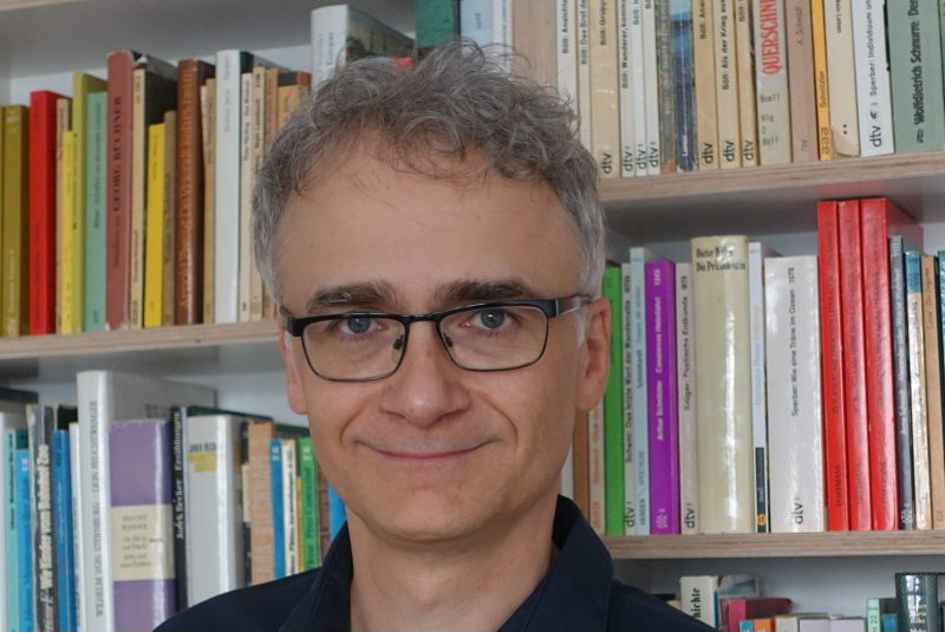 Mr. Winkler, we, teachers and students from the Faculty of History and Philosophy of the Moldova State University, are very happy to have the possibility this year of collaboration with you and our partners from Ukraine and Belarus in the digital project “Measuring Ghettos: Grodno – Cernăuți – Chișinău”. Even more, because it is the second project that we participate in together, I am talking about the one from the last year, also initiated by you “Forgotten Holocaust in Transnistria?”, in which took part students from Moldova and Ukraine.
- Does the subject of the Holocaust have a special place in the activities of the Institute for German Culture and History of Southeastern Europe at LMU Munich (Germany)? Or maybe it is also special for you?
In Central and Southeastern Europe, history, culture and literature from the 20th century to date are also often linked to the Holocaust and its aftermath. The IKGS deals with this geographical space in which the Holocaust almost entirely annihilated the Jewish population. Therefore the issue plays a significant role in the diverse activities of the institute. In addition to our research aims, it is also important for us to communicate the incidents and the aftermath of the Holocaust to young people. We therefore often involve them closely into our projects by enabling them to implement their own ideas and to exchange ideas with students from other countries. As for me, I’ve studied the Holocaust for several years from different perspectives and using different methods, often in collaboration with knowledgeable experts from countries in which we carry out the current project.
- What is the digital project “Measuring Ghettos: Grodno – Cernăuți – Chișinău” about?
In this international project, Moldovan, Ukrainian and Belarusian studentsget to know the Jewish life of Grodno, Cernăuțiand Chișinău from 1941 to 1944 bysurveying the ghettos and using innovative methods. They record the sites of the ghettos by inspecting and documenting streets, squares and houses, they research biographies and individual fates and interview the local population, they talk to contemporary witnesses and their descendants, visit local Jewish institutions and explore the current Holocaust memorial culture in their cities. Together with multipliers from civil society organisations and universities and experts from the IT sector, several hybrid workshops will be held from October to December 2020. All participants from the three countries network with each other in digital spaces, discussing the culture of remembrance in Ukraine, Belarus and the Republic of Moldova and presenting their own micro-projects in which they have applied digital methods over several weeks.
- Why did you choose the cases of the Grodno, Cernăuți and Chișinău Ghettos?
We have the opportunity to examine and compare former ghettos from three countries. These ghettos varied in structure and duration. What they had in common, however, was that tens of thousands of people were housed there and that there are visible and invisible traces, known and unknown materials. There are many historical writings that describe the ghettos of that time. They include significant works. But tounderstand history it is also important for the young generation to look for traces and ask questions themselves. And you can relate these questions to all ghettos:where and how did people live in the former ghetto? What was their everyday life like before the war?Why were the people persecuted at these times and who persecuted them? What still reminds us of that time today and in what way do we remember it? And what was going on in the minds of people who were perhaps as young then as our participants are now?
- What are the main goals of this project?
With our project and together with our Ukrainian, Moldovan and Belarusian partners, we are focusing on four main goals: first of all, we are keeping the memory of the Holocaust and the ghettos alive for younger generations and a wider public. Secondly, we want to offer new digital access to historical topics. Thirdly, we are enabling the exchange of young people across national borders. And finally, we want to strengthen civil society awareness – as a basis for commitment to human rights and democracy.This goal is particularly to be emphasized as it is directed towards the future. Our project is supported by the Federal Foreign Office in the framework of the programme “Expanding Cooperation with Civil Society in the Eastern Partnership Countries and Russia”.
- Could you tell us more about the digital component of this project? Was it somehow imposed as a necessity for adaptation to the current conditions of the Covid-19pandemic? Do you believe that this digital component has some positive aspects that can be utilized in the future whenthe pandemic is over?
The project was also digital from the start. In this respect, when the Covid-19 pandemic broke out, we were already well prepared for the situation and did not have to completely reorganize the project. Our international exchange now takes place in virtual space.On the other hand, the project also has many offline aspects, e.g. local workshops and the micro-projects in which the 21 participants explorethe former ghettos in their cities and collect materialsin small teams. In this respect, the overall project can also be described as a hybrid project.What we arealready seeing is that thanks to the digital component, the young participants have quickly acquired new technical skills. For many, working with a drone or recording a podcast was rather unknown. Now they can learn it faster than expected and break down inhibitions.
- What results do you expect from this project?
After the project is over, I hope that we can reach a broader public with these issues. For this purpose, we are developing a six-language digital platform (https://ghettos.digital) that presents all parts of the project, in particular the participants’ individual micro-projects. The plan is for these micro-projects to be methodically processed by experts in Holocaust education in the three countries involved. By finally sharing their experiences and results in schools and educational institutions, the participants themselves become multipliers for the project and its content.
Thank you very much for the interview,
Dr. Galina Corman, universitary lecturer; Alexandru Bejenaru, universitary assistant.

